
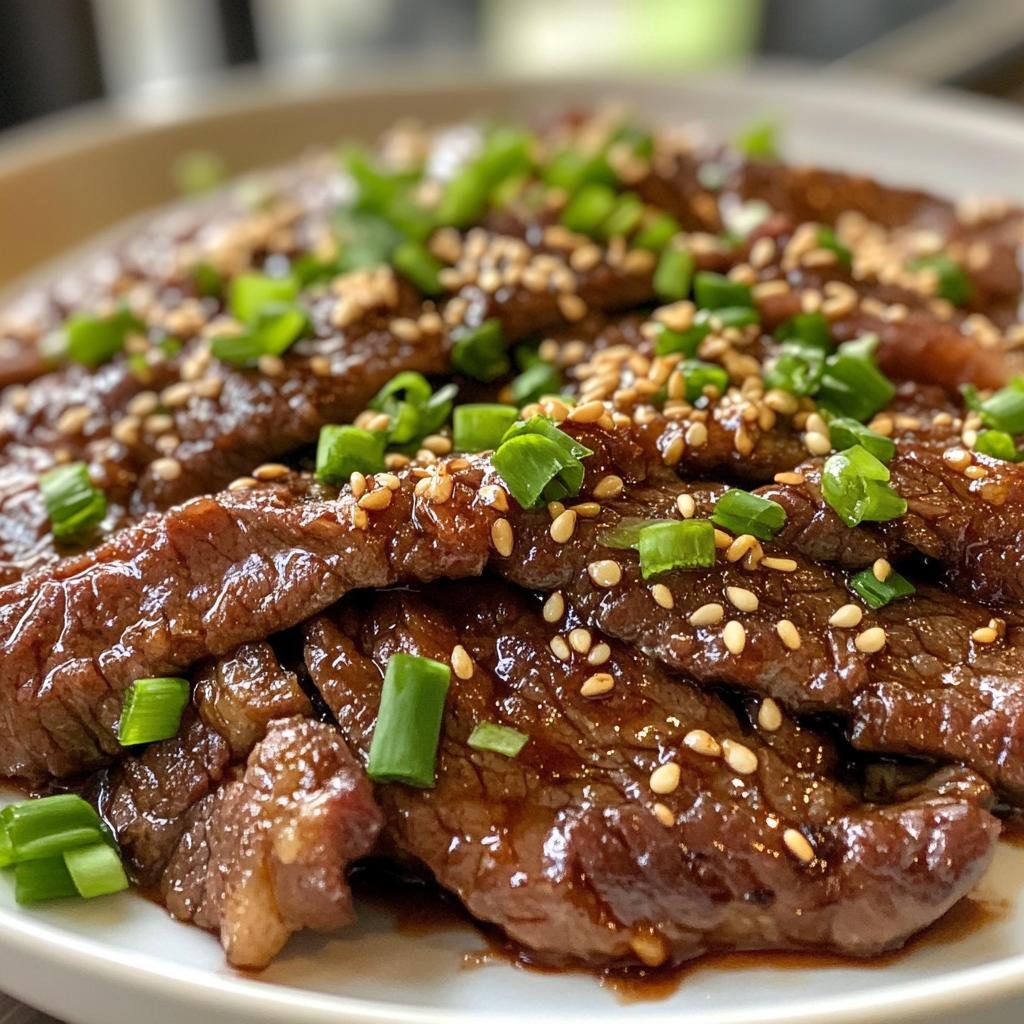
I still remember my first bite of Korean bulgogi beef at a tiny street-side restaurant in Seoul – that perfect balance of sweet, savory, and smoky flavors made me an instant fan. This isn’t just any beef dish; it’s magic how the thin slices soak up all that incredible marinade and turn melt-in-your-mouth tender when cooked. My version brings that authentic Korean BBQ taste right to your kitchen with simple ingredients you probably already have. The secret? A marinade that’s equal parts soy sauce and brown sugar, with a kick of garlic and ginger that’ll make your whole house smell amazing while cooking.
Why You’ll Love This Korean Bulgogi Beef
Trust me, once you try this recipe, you’ll be hooked—just like I was! Here’s why:
- Quick & easy: From marinade to plate in under 30 minutes (plus marinating time—but even 1 hour does wonders!)
- Flavor explosion: That perfect sweet-savory-tangy combo makes every bite irresistible
- Melts in your mouth: Thinly sliced beef cooked hot and fast stays incredibly tender
- Super versatile: Serve it over rice, in lettuce wraps, or straight from the pan (no judgment!)
Seriously, it’s the kind of dish that’ll have everyone asking for seconds—and the recipe.
Korean Bulgogi Beef Ingredients
Here’s everything you’ll need to make the most addictive bulgogi beef this side of Seoul. I’ve included all my little tweaks and substitutions too – because I know how frustrating it is when you’re missing one ingredient!
- 1 lb thinly sliced ribeye or sirloin (I always ask my butcher to slice it paper-thin against the grain – makes ALL the difference for tenderness)
- 1/4 cup soy sauce (low-sodium works great if you’re watching salt, or use tamari for gluten-free)
- 2 tbsp brown sugar (that molasses kick is key – but honey or maple syrup work in a pinch)
- 1 tbsp sesame oil (toasted, please! The regular stuff just doesn’t have that magic nutty aroma)
- 2 cloves garlic, minced (or 1 tsp garlic powder when I’m lazy)
- 1 tsp fresh ginger, grated (I keep a knob in my freezer and just microplane what I need)
- 1 tbsp honey (helps with that gorgeous caramelization – maple syrup works too)
- 1/2 onion, thinly sliced (yellow or sweet both work beautifully)
- 1 tbsp toasted sesame seeds (for that final crunch – black sesame seeds look gorgeous too)
- 2 green onions, chopped (the green parts only if you’re fancy, but I use the whole thing)
Don’t stress if you’re missing something – this recipe is surprisingly forgiving. The only non-negotiables are the soy sauce, sugar, and sesame oil. Those are the holy trinity of bulgogi flavor!
How to Make Korean Bulgogi Beef
This is where the magic happens! Don’t let the simplicity fool you – a few key techniques will take your bulgogi from good to “can’t-stop-eating-it” great. I’ve made this so many times I could do it with my eyes closed (though I don’t recommend that with hot pans!).
Step 1: Prepare the Marinade
Grab your favorite mixing bowl – I use an old Pyrex that’s seen years of bulgogi batches. Start with the wet ingredients: soy sauce, brown sugar, sesame oil, and honey. Whisk until the sugar dissolves completely. Then add your aromatics – that gorgeous minced garlic and freshly grated ginger. Give it a quick taste (yes, sneak a spoonful!) – it should be nicely balanced between sweet and salty. Too sweet? Add a splash more soy sauce. Too salty? A pinch more sugar. Trust your palate!
Step 2: Marinate the Beef
Now for the fun part – add your thinly sliced beef and onions to the marinade. Use your hands (clean ones, please!) to really massage that flavor into every nook and cranny of the meat. I like to let mine marinate for at least an hour in the fridge – but overnight is absolute perfection. Pro tip: Don’t go beyond 24 hours though – the acidity can start to break down the meat too much, and we want tender, not mushy!
Step 3: Cook the Beef
Heat your pan (cast iron is my hero here) over medium-high heat until it’s seriously hot – a drop of water should sizzle and evaporate instantly. Cook in batches – overcrowding will steam your beef instead of giving it that gorgeous caramelized edge we all love. Each batch only needs 3-4 minutes – you’ll see the edges curl and brown beautifully. The smell alone will have your family gathered in the kitchen begging for samples!

Tips for Perfect Korean Bulgogi Beef
After making this dish more times than I can count (and eating even more of it!), I’ve picked up some game-changing tricks that take bulgogi from good to restaurant-quality. These are the little things that make all the difference!
- Slice meat partially frozen: That paper-thin cut is SO much easier when your beef is about 30% frozen. Just pop it in the freezer for 45 minutes before slicing – suddenly your knife glides through like butter!
- Cast iron is your best friend: My well-seasoned skillet gets hotter than regular pans, giving that perfect caramelized crust without overcooking the inside. No cast iron? Just make sure whatever pan you use is screaming hot before adding meat.
- Garnish right before serving: Those sesame seeds and green onions aren’t just pretty – they add fresh texture and flavor. I always wait until the beef’s plated to sprinkle them on so they stay crisp and vibrant.
- Don’t stir too soon: When cooking, resist the urge to constantly flip! Let the beef sit for at least a minute per side to develop those gorgeous browned edges – that’s where all the deep, caramelized flavor lives.
Oh! One more thing – if your marinade seems too thin, a teaspoon of cornstarch mixed in helps it cling to the beef better. But shhh… that’s my secret weapon I don’t tell just anyone!
Serving Suggestions for Korean Bulgogi Beef
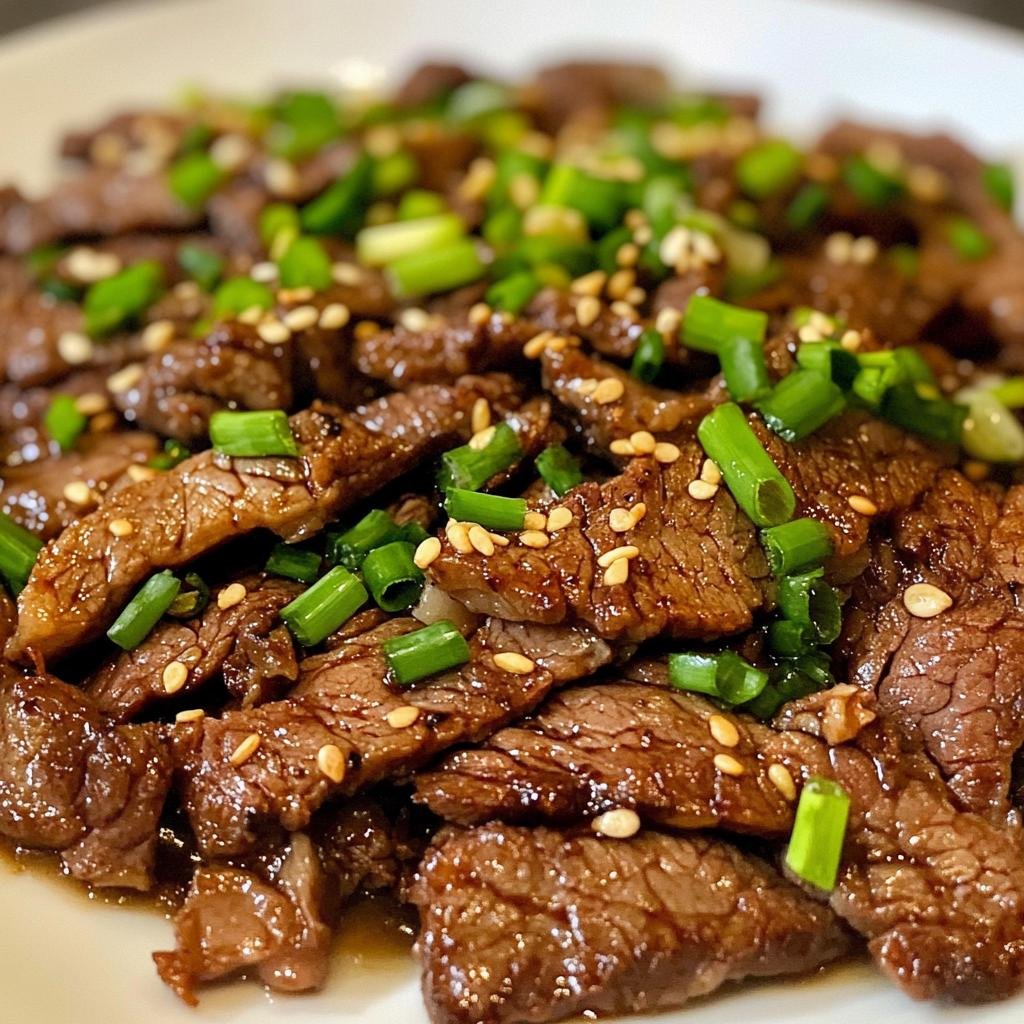
Oh, the possibilities! My favorite way is piled high over steaming white rice with a fried egg on top – that runny yolk mixed with the sweet beef is heaven. But don’t stop there:
- Lettuce wraps: Crisp butter or romaine leaves make perfect little bulgogi tacos
- Kimchi sidekick: That spicy tang cuts through the richness beautifully
- Noodle bowl: Toss with udon or rice noodles for a heartier meal
- Banchan bonus: Add traditional Korean sides like cucumber salad or bean sprouts
Honestly? Leftovers never last long enough to get creative – we usually eat it straight from the container!
Korean Bulgogi Beef Variations
One of my favorite things about this recipe is how easily you can shake it up when you’re craving something different. Here are my go-to twists that never disappoint:
- Chicken bulgogi: Swap the beef for thinly sliced chicken thighs – they stay juicy and soak up the marinade just as beautifully. I like to add a splash of rice vinegar for extra tang.
- Mushroom magic: For a veggie version, meaty king oyster or shiitake mushrooms are incredible. They get that same caramelized edge and soak up flavors like sponges.
- Spicy kick: Stir in 1-2 tablespoons of gochujang (Korean chili paste) to the marinade – it adds the most addictive sweet heat. Start with less if you’re spice-shy!
- Pork swap: Thin pork chops or shoulder work great too – just adjust cooking time since pork needs to be fully cooked through.
- Pineapple surprise: My wildcard addition! A few chunks of fresh pineapple in the marinade tenderizes the meat and adds tropical sweetness.
The beauty of bulgogi is how forgiving it is – once you’ve got that soy-sugar-sesame base, you can play to your heart’s content. Just last week I made a version with pears in the marinade (a Korean grandma’s trick for natural sweetness) that had everyone begging for the recipe!
Storing and Reheating Korean Bulgogi Beef
Okay, confession time – I rarely have leftovers because this dish disappears so fast in my house! But when I do manage to save some (usually by hiding a portion in the back of the fridge), here’s how I keep it tasting just as amazing as when it was fresh.
Storing Your Leftover Bulgogi
First rule: let it cool completely before storing! I learned this the hard way when I once packed steaming hot bulgogi into a container – next day, it was swimming in condensation and lost that perfect texture. Now I spread it out on a plate for about 20 minutes first.
For the fridge, airtight containers are non-negotiable. Glass works best – plastic can sometimes absorb those strong garlic and sesame flavors. It’ll stay delicious for about 3 days, though the onions do soften a bit over time.
Freezing? Absolutely! I portion mine into freezer bags (squeeze out all the air!) or small containers. Lay the bags flat to freeze – this way they stack neatly and thaw faster. Frozen bulgogi keeps its magic for about 3 months. Pro tip: Write the date on the bag because freezer amnesia is real!
Reheating Like a Pro
Microwave reheating is tempting but trust me – it turns your beautiful bulgogi into rubber. Instead, I always use a skillet over medium heat. Just a tiny splash of water or broth helps loosen the marinade without making it soggy.
If frozen, thaw overnight in the fridge first. But in a pinch? No worries! I’ll sometimes cook it straight from frozen – just add a lid to the pan and give it a few extra minutes, stirring occasionally.
One last secret: I always add fresh garnishes after reheating – another sprinkle of sesame seeds and green onions makes it look and taste brand new!
Korean Bulgogi Beef FAQs
I get asked these questions ALL the time – and trust me, I’ve made every mistake possible with bulgogi over the years! Here are the answers that’ll save you from learning the hard way like I did.
Can I use a different cut of beef?
Absolutely! While ribeye and sirloin are traditional (and my personal favorites), flank steak works great too – just make sure to slice it extra thin against the grain. Chuck roast can be surprisingly good if you marinate it longer (overnight is best). The key is always that thin slicing – it makes cheaper cuts taste expensive!
Why did my beef turn out tough?
Oh honey, I’ve been there! Usually it’s one of three things: not slicing against the grain (look for those long muscle fibers and cut across them), overcooking (just 3-4 minutes per batch!), or skipping the sugar in the marinade (it tenderizes as much as it flavors). My first-ever bulgogi was like shoe leather until I figured these out!
Can I make this ahead for meal prep?
You bet! I actually think the flavors get better after a day in the fridge. Just keep the cooked beef separate from rice if you’re prepping full meals. When reheating, splash a teaspoon of water in the pan to refresh the sauce without drying out the meat. It’ll taste freshly made!
Is there a substitute for sesame oil?
In a pinch? Sure – but you’ll miss that toasty aroma! Peanut oil or even a neutral oil with a sprinkle of toasted sesame seeds can work. Just don’t use regular olive oil – its flavor clashes with the Korean spices. My Korean aunt would gasp, but sometimes I’ll use half sesame oil, half vegetable oil to stretch my pricey sesame oil!
Can I grill bulgogi instead of pan-frying?
Oh my goodness YES – and it’s magical! Use a grill basket or skewers (soak wooden ones first!) to keep those thin slices from falling through. The smokiness takes it to another level. Just watch closely – it cooks crazy fast over flames. I always keep a spray bottle handy for flare-ups!
Still have questions? Slide into my DMs anytime – I could talk bulgogi all day! Just don’t blame me if you start dreaming about that sweet-savory aroma…
Nutritional Information
Okay, let’s talk numbers – but remember, these are just estimates! Your actual nutrition will vary based on the exact ingredients you use (like how much marinade clings to the beef or whether you use low-sodium soy sauce). Here’s the breakdown per serving:
- Calories: 320 kcal
- Fat: 14g (5g saturated)
- Protein: 28g
- Carbs: 18g
- Sugar: 12g
- Sodium: 850mg
Not too shabby for something that tastes this indulgent, right? The protein comes from that beautiful beef, while most of the carbs and sugar are from the marinade ingredients. If you’re watching sodium, definitely opt for low-sodium soy sauce – it makes a big difference!
Try this recipe and tag us on social – I’d love to see your bulgogi creations! Nothing makes me happier than seeing others fall in love with this dish like I did.
Print
Korean Bulgogi Beef: Irresistible 30-Minute Flavor Bomb
- Total Time: 25 minutes
- Yield: 4 servings 1x
- Diet: Low Lactose
Description
Korean bulgogi beef is a flavorful and tender dish made with thinly sliced beef marinated in a sweet and savory sauce.
Ingredients
- 1 lb thinly sliced beef (ribeye or sirloin)
- 1/4 cup soy sauce
- 2 tbsp brown sugar
- 1 tbsp sesame oil
- 2 cloves garlic, minced
- 1 tsp ginger, grated
- 1 tbsp honey
- 1/2 onion, thinly sliced
- 1 tbsp toasted sesame seeds
- 2 green onions, chopped
Instructions
- Mix soy sauce, brown sugar, sesame oil, garlic, ginger, and honey in a bowl.
- Add beef and onions to the marinade. Coat evenly and refrigerate for at least 1 hour.
- Heat a pan over medium-high heat and cook the beef for 3-4 minutes until browned.
- Garnish with sesame seeds and green onions before serving.
Notes
- Slice beef thinly against the grain for tenderness.
- Marinate longer for deeper flavor (up to 24 hours).
- Serve with rice and kimchi for a complete meal.
- Prep Time: 15 minutes
- Cook Time: 10 minutes
- Category: Main Dish
- Method: Pan-frying
- Cuisine: Korean
Nutrition
- Serving Size: 1 serving
- Calories: 320
- Sugar: 12g
- Sodium: 850mg
- Fat: 14g
- Saturated Fat: 5g
- Unsaturated Fat: 7g
- Trans Fat: 0g
- Carbohydrates: 18g
- Fiber: 1g
- Protein: 28g
- Cholesterol: 70mg
Keywords: Korean bulgogi beef, beef marinade, Korean BBQ